Why hotels must abandon single-use plastic water bottles — and what the ocean is already telling us.
HBy H2Origin · Origin of Clean Water, Origin of Health · 6 min read
Walk into almost any hotel room and it's waiting on the nightstand: a small plastic water bottle, sealed and chilled. It feels like hospitality. It is, in truth, one of the most quietly destructive habits in travel — repeated billions of times a year, in millions of rooms, and paid for long after checkout by the oceans, the climate, and the guests themselves.
01 — The Scale
One small bottle, multiplied by a whole industry.
There are roughly 187,000 hotels operating worldwide, holding some 17.5 million guest rooms. Multiply one bottle by that footprint and the numbers stop looking harmless. A typical 200-room hotel gets through an estimated 300,000 single-use plastic items every month — and globally, we buy about one million plastic bottles every single minute. Fewer than one in ten is ever recycled.
187Khotels operating worldwide, ~17.5M guest rooms300Ksingle-use plastic items a 200-room hotel burns through each month1Mplastic bottles bought worldwide every minute9%of all plastic ever made has actually been recycled
It Doesn't Stay Where You Drop It
The same bottle, three places it should never be.
Imagine it clean.
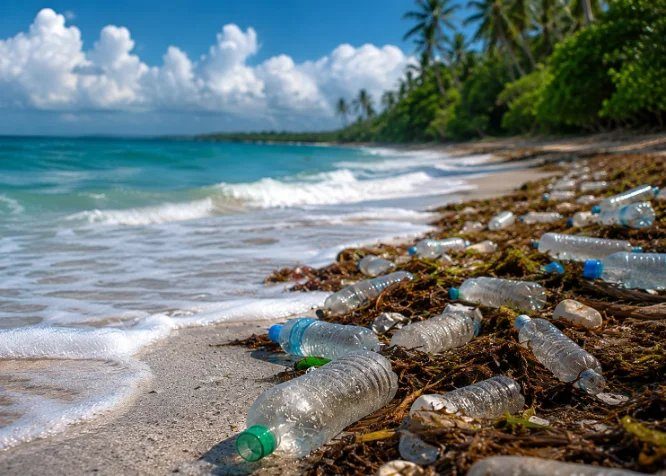
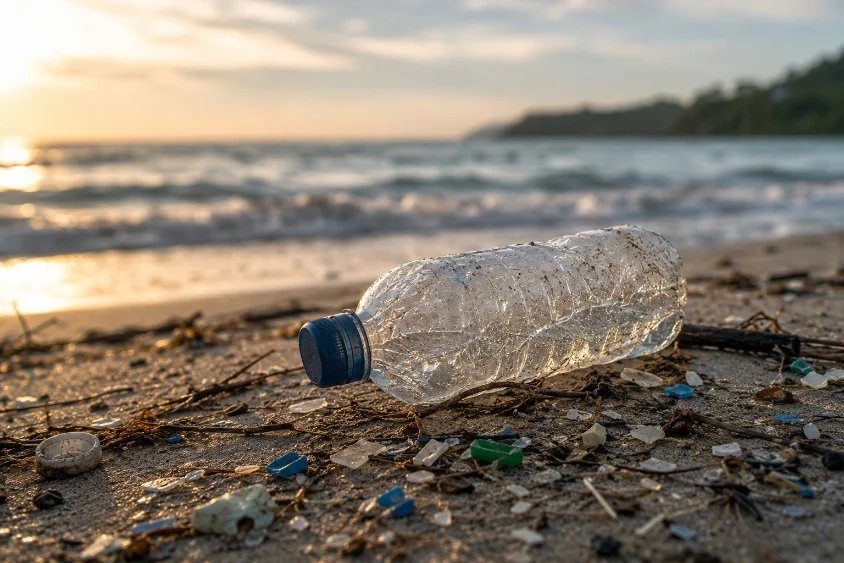
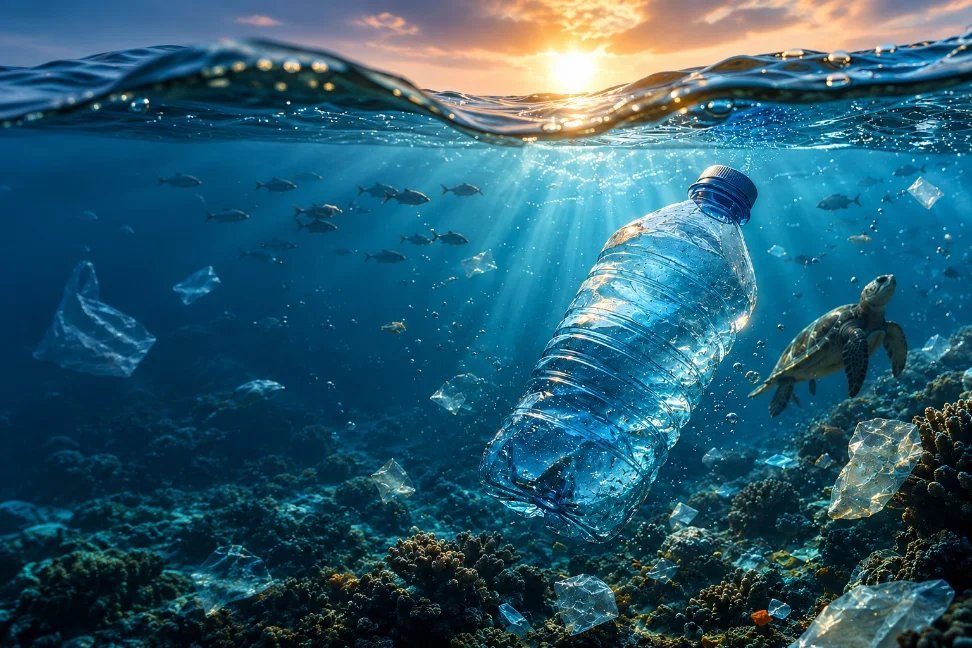
The seaCarried out on the tide, then never brought back.
Imagine it clean.
The lakeFreshwater fouled at the source communities depend on.
Imagine it clean.
The landBuried or blown across the ground for centuries.
02 — Where It Ends Up
Plastic doesn't disappear. It goes to sea.
A single bottle takes an estimated 450 years to break down — and even then it never truly leaves, fragmenting into microplastics instead. Every year roughly 11 million tonnes of plastic pour into the ocean: the equivalent of tipping 2,000 garbage trucks of plastic into the sea, every single day (UNEP, 2025). Out in the Pacific it has gathered into a floating garbage patch larger than Texas.
11Mtonnes into the ocean each year2,000garbage trucks dumped at sea, daily450 yrsfor one bottle to break down> Texassize of the Pacific garbage patch
03 — The Living Cost
The ocean is paying — and so are we.
More than one million seabirds and over 100,000 marine mammals die from plastic pollution every year — entangled, or starved with stomachs full of plastic they mistook for food. And it comes back to us: microplastics now move through the entire marine food chain, and studies have detected them in the vast majority of bottled water tested. The bottle meant to keep guests healthy is quietly seeding the food chain that feeds them.
1M+seabirds killed by plastic, every year100K+marine mammals killed, every year
04 — The Climate Link
Every bottle is a fossil-fuel product.
Around 99% of plastic is made from oil and gas. Producing and disposing of the world's plastic generated an estimated 1.8 billion tonnes of greenhouse gases in 2019 — roughly 3.4% of global emissions — and it's climbing fast, with production set to triple by 2060 (UN).
Every case of bottled water trucked to a hotel carries a hidden carbon receipt: extraction, manufacturing, bottling, refrigeration and freight — for a product the tap could have delivered.
05 — The Fix
There is a better pour.
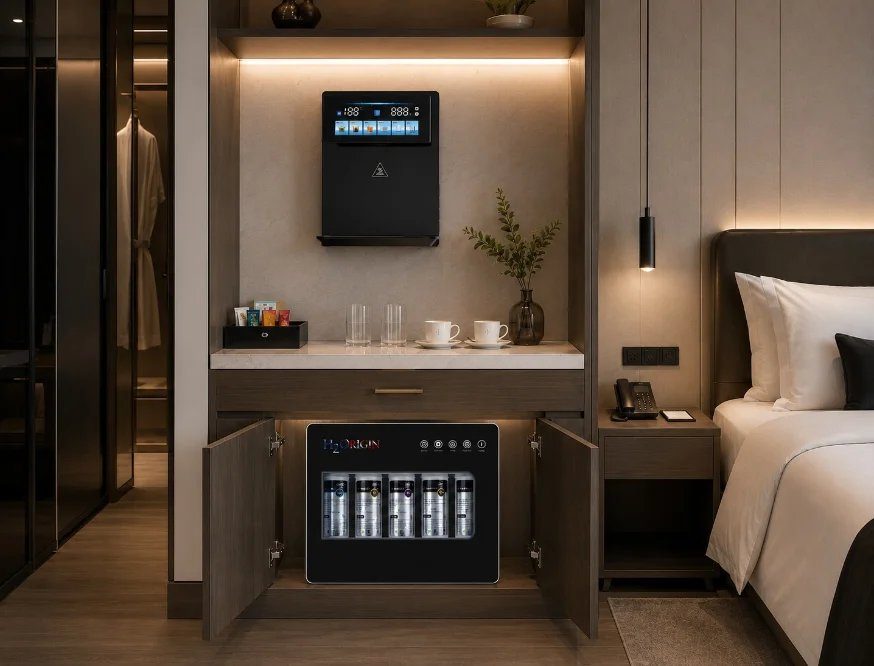
None of this is inevitable. Purified-water systems and refill dispensers let hotels serve cleaner, better-tasting water — filtered on site, chilled and unlimited — with no disposable bottle at all. A single dispenser can replace tens of thousands of plastic bottles a year: it cuts waste at the source, removes the carbon of bottling and freight, and usually costs far less over time than trucking in cases of water forever.
Filtered on site
Purified, mineral-balanced, chilled water on demand.
Zero single-use
Tens of thousands of bottles removed per property, per year.
Lower lifetime cost
No recurring pallets, storage or disposal to pay for.
Smaller footprint
Cuts the bottling, refrigeration and freight emissions.
06 — The Guest
Guests aren't just ready. They're asking.
In recent traveler surveys, around three in four say they want to travel more sustainably. A well-designed refill station reads as modern and premium — not cheap. It's a visible signal that a hotel takes its guests, and its coastline, seriously.
Removing the plastic bottle doesn't diminish the stay. Done well, it upgrades it.
Don’t use it.
The single-use bottle had its century.
The next great hospitality upgrade is the one you'll never see in a landfill.
Sources: UNEP (2025); UN Environment Programme on plastics & climate; Our World in Data; Condor Ferries / MBRC ocean-plastic statistics; hotel-industry sustainability reporting. Figures are indicative and drawn from publicly reported estimates.
Choosing a selection results in a full page refresh.
 Imagine it clean.
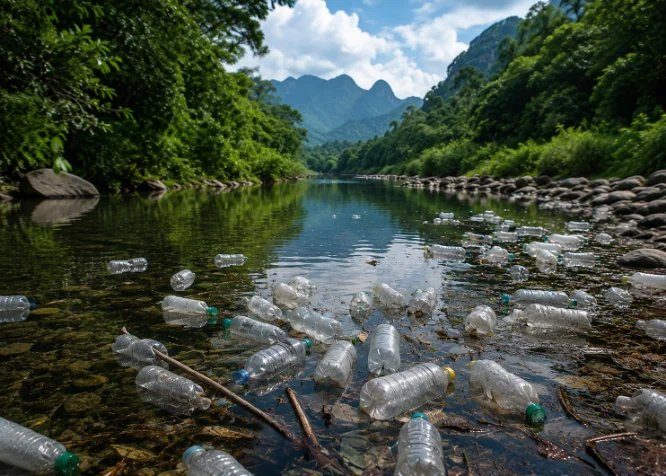 Imagine it clean.
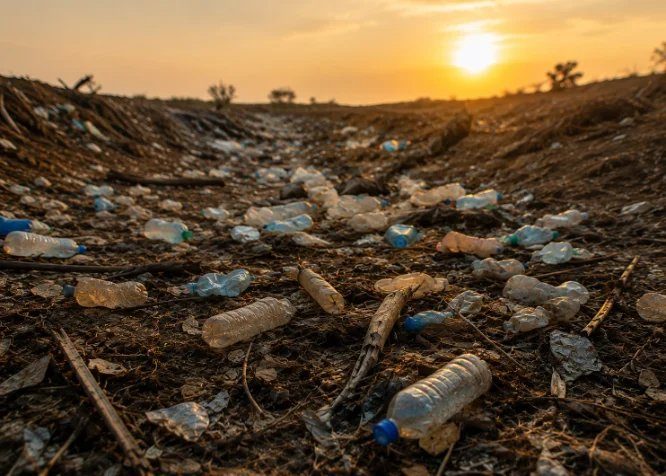 Imagine it clean.